
By providing this layer of certainty, insurance gives investors, exporters and lenders the confidence to commit to reconstruction projects that might otherwise stall.


The recovery economy: How insurance rebuilds, redevelops and creates resilience

Andrew Tongue Political Risk & Financial Risks, Starr
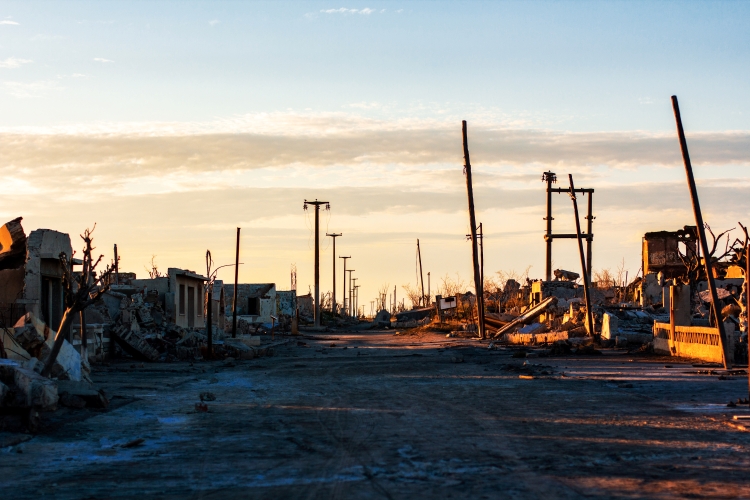
When conflict ends, rebuilding begins. But recovery isn't just about clearing rubble or restoring power lines, it's about restoring trust, restarting trade and reconnecting economies to the global system.
That process takes capital, coordination and confidence. Insurance sits quietly at the centre of all three.
Insurance isn't just a safety net. It's also the mechanism that turns recovery plans into progress.
Andrew Tongue Political Risk & Financial Risks, Starr
The invisible infrastructure of recovery
$0-0 bn
Reconstruction efforts after conflict are vast. Estimates from the World Bank, UN and EU suggest that current rebuilding programmes could total $700-900 billion and take decades to complete.
Governments, development banks and donors are often first on the scene, but private capital is what sustains long-term recovery. To mobilise, that capital needs protection.
That's where Credit & Political Risk Insurance (CPRI) becomes essential.
It protects against:
-

Non-payment by governments or private entities
-

Contract frustration and licence cancellations
-

Political events such as nationalisation,currency inconvertibility or war
From instability to opportunity
Across developing and post-conflict regions, insurance is enabling the projects that underpin national resilience. For example:
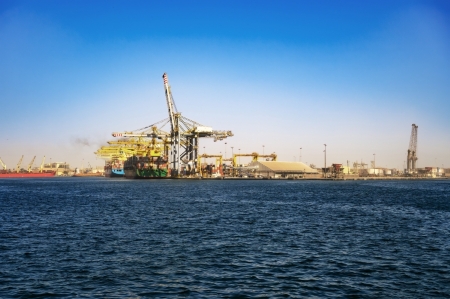
In Senegal and Côte d'Ivoire, port expansions and logistics infrastructure are supporting growing commodity flows and improving access to global markets.
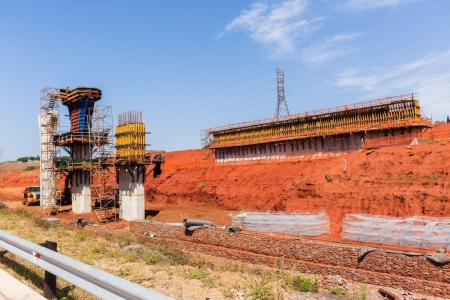
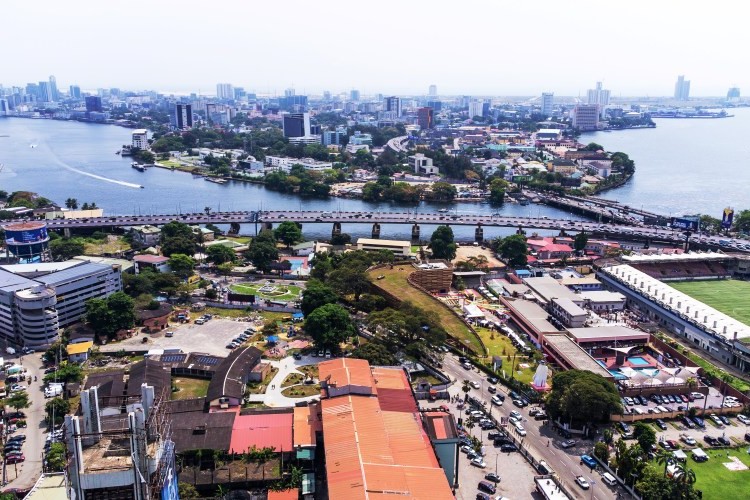
West Africa, major road and rail programmes are reconnecting trade corridors, from coastal ports in Ghana and Côte d'Ivoire through to land-linked Sahelian states, strengthening regional integration and supply chains.
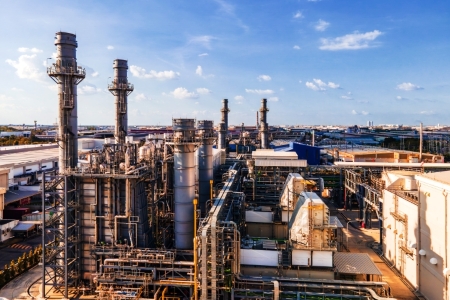
In Nigeria, large-scale energy and industrial projects, including the Dangote Petroleum Refinery, are reshaping domestic energy security and export capacity.
Unlocking
private capital
Reconstruction cannot rely on public money alone.
In 2025, the UK government called for more private capital to be unlocked for rebuilding programmes - a move echoed by multilateral agencies around the world.
Insurance plays a pivotal role in that process not only by enabling investment but by providing long-term support that keeps capital in place throughout decades of redevelopment. It does this by:
-
De-risking investment
enabling private lenders to fund large-scale infrastructure confidently.
-
Supporting exporters and contractors
protecting against non-payment or contract cancellation.
-
Encouraging resilience
supporting long-term investment that helps economies rebuild on more sustainable and resilient footing over time.
Coordinating the global response
Rebuilding a nation takes partnership. Governments, aid agencies, multilateral development banks and private investors must all align, often through layered financial arrangements and complex cross-border agreements.
Insurance acts as a unifying force, providing a common language of risk and protection that allows these parties to work together efficiently. It ensures capital flows where it's needed most -
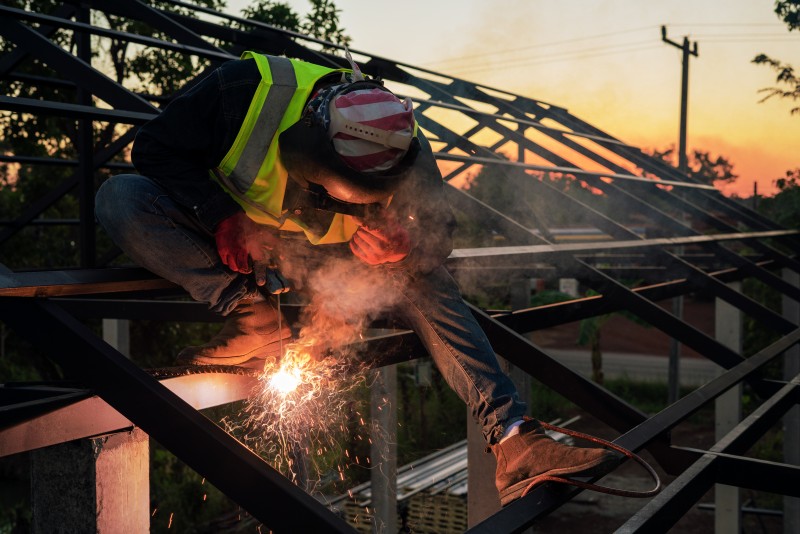
Multilateral development banks (MDBs) are international financial institutions funded by member countries to provide loans, grants and technical help for economic and social development in developing nations, focusing on poverty reduction, infrastructure, health, and climate goals.
-

be that into commodity trade...
-

or into roads...
-

water systems...
-

and the human infrastructure...
-

that builds and sustains them.
In the most politically and economically volatile regions, participation across the insurance market can ebb and flow. As conditions stabilise, opportunities to support reconstruction efforts tend to emerge and insurers increasingly look for ways to play a constructive role when the environment allows.
Across the world, coordination is taking place
Ukraine
-
Poised for one of the largest reconstruction efforts in modern history, with the World Bank projecting costs exceeding $400 billion.

-
Insurers will be vital in enabling financing for housing, energy and transport infrastructure as the nation transitions from conflict to stability.

Gaza and the wider Palestinian Territories
-
Where recovery will rely on international donor coalitions and private investment to restore essential services such as health, water and transport.

-
The UK government has already signalled plans to unlock private capital — protection for those funding flows will be crucial.

Syria
-
With reconstruction needs estimated at more than $200 billion, insurance will ultimately play an essential role in de-risking investment amid ongoing sanctions and political volatility.

Lebanon
-
Facing deep economic crisis and rebuilding after years of financial collapse and infrastructure damage, where insurance can help restore investor confidence and re-establish trade.
West Africa
-
Continuing to attract capital for major infrastructure projects such as refineries, transport corridors and energy networks.
*All financial statistics as at January 2026.
A patient,accountable market
-
Credit & Political Risk insurance is not new, but its relevance has never been greater.
-
Once a niche Lloyd's product, it has grown consistently by around 10% each year for the past two decades and now supports investment in more than 100 countries worldwide.
It remains one of the few markets built on long-term partnerships and proven claims performance.
Between 2019-2022, 100% of claims submitted were paid, with private insurers relieving participating banks of over $1bn of credit losses.
Even amidst geopolitical upheaval, established insurers continue to pay, protect and provide the stability global reconstruction depends on.
 Political Risk & Financial Risks
At Starr, we underwrite specialty risks with precision and purpose - combining global expertise, data-led insight and empowered decision-making to deliver clear, responsive solutions when they matter most.

London
Andrew Tongue
andrew.tongue@starr.com
London
Harry Walford
harry.walford@starr.com
London
Alex Mearing
alex.mearing@starr.com
London
James Hutcherson
james.hutcherson@starr.com
London
Henry Hodgson
henry.hodgson@starr.com
London
Henry Lyon
henry.lyon@starr.com
London
Justin Rampersad
justin.rampersad@starr.com
London
Stuart Bell
Stuart.Bell@starr.com